
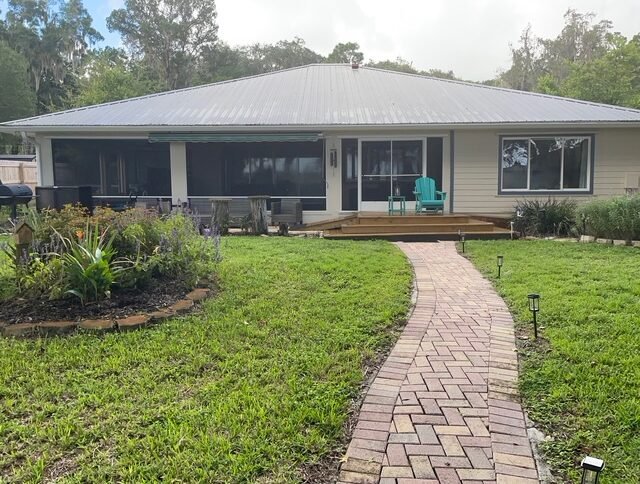
There’s a particular kind of pride that comes with pulling into your own driveway and actually liking what you see. If it’s been a while since that happened at your place, you’re not alone and you’re definitely not alone in Dunnellon. Between the humidity, the pollen, the afternoon storms, and the relentless Florida sun, exterior surfaces here take a beating that homeowners in cooler, drier climates simply don’t have to think about. This post walks through what a real exterior painting and restoration project looks like from start to finish, so you know what to expect if you’re considering one for your own home.
Why Dunnellon Homes Age Differently
Dunnellon sits in a sweet spot along the Withlacoochee and Rainbow Rivers, which makes it a gorgeous place to live but that same proximity to water means higher ambient humidity year-round. Add in Central Florida’s intense UV exposure and the summer rain pattern of near-daily downpours, and you’ve got a climate that’s uniquely hard on paint film, wood trim, and siding.
Common issues we see on homes throughout Marion and Citrus counties include:
- Chalking and fading on south- and west-facing walls from sustained sun exposure
- Mildew and algae growth, especially in shaded areas or under eaves where moisture lingers
- Peeling and cracking around windows, doors, and fascia boards where water intrusion has started
- Wood rot on decks, soffits, and trim, particularly on older homes with cedar or untreated wood
- Stucco cracking from the freeze-thaw-adjacent temperature swings and settling
None of this means your home is falling apart. It means Florida exteriors need a different level of care than a paint job alone can provide which is where restoration comes in before a single drop of paint goes on.
The First Step: An Honest Evaluation
Every good exterior project starts with a walk-around, not a quote. A thorough evaluation means physically checking siding for soft spots, probing trim and fascia for rot, looking under eaves for mildew colonies, and checking caulk lines around every window and door. Homeowners are often surprised by what turns up a soft patch of fascia board they’d never noticed, or hairline stucco cracks that, left alone, would let water behind the wall over another rainy season.
This is also the point where color selection gets discussed. Florida light behaves differently than light up north colors read brighter and warmer under that much sun so a shade that looked subtle on a swatch can look completely different painted across 2,000 square feet of siding. Seeing large sample boards in actual outdoor light, at different times of day, saves a lot of regret later.
Restoration Comes Before Paint, Not After
This is the step that separates a project that lasts three years from one that lasts ten or more. Paint is not a repair material, it’s a finish. If it goes over rot, cracks, or failing caulk, it will fail in the same places, usually faster than the surrounding areas.
A proper restoration phase typically includes:
Pressure washing. This isn’t optional cosmetics, it strips away mildew, algae, chalking paint residue, and loose debris so the new coating actually has something clean to bond to. Skipping this step is one of the most common reasons a paint job fails early.
Wood repair and replacement. Any soft, rotted, or insect-damaged wood gets cut out and replaced before painting starts. On older homes with cedar siding or decking, this can mean replacing individual boards while matching the existing profile, rather than a wholesale tear-out.
Caulking and sealing. Gaps around trim, windows, and joints get re-caulked with a flexible, paintable exterior sealant. This is small, unglamorous work that does an outsized amount to keep water out over the following years.
Surface prep and priming. Scraping loose paint, sanding rough transitions, and spot-priming bare wood or repaired areas ensures the topcoat goes on evenly and adheres properly, rather than telegraphing every patch and repair through the final color.
Homeowners sometimes ask why this phase takes longer than the painting itself. The honest answer is that repair and prep are where the actual value of the project lives.
Choosing the Right Paint for Florida’s Climate
Not all exterior paint is built for this environment. A 100% acrylic exterior paint with strong UV resistance and mildew-resistant additives is worth the extra cost here, because the alternative is watching a budget paint job chalk and fade within two or three summers. Look for products rated specifically for high-humidity, high-UV climates, and don’t skimp on the number of coats a single heavy coat rarely performs as well as two properly applied coats, especially over previously painted or repaired surfaces.
Application matters as much as product. Painting in Florida means working around afternoon thunderstorms and high midday humidity, which affects dry time and adhesion. Morning starts, careful weather tracking, and knowing when to pause rather than push through a coat are all part of doing the work right, not just doing it fast.
What the Transformation Actually Looks Like
By the time a full exterior restoration and repaint wraps up, the visible difference is dramatic but the more important changes are the ones you can’t see right away. Rotted wood has been replaced instead of painted over. Gaps that were letting moisture behind the siding are sealed. The surface has been cleaned down to something the new paint can actually hold onto for years, not months.
For a lot of homeowners, this kind of project also resets how they feel about a house they’ve lived in for a decade or more. A tired, chalky, mildew-streaked exterior can make even a well-maintained home look neglected from the street. A clean, evenly coated, properly repaired exterior does the opposite: it signals that the whole property is cared for, which matters whether you’re planning to stay for another twenty years or getting ready to sell.
A Few Signs It’s Time to Start
If you’re on the fence about whether your home needs this kind of attention, a few signals are worth paying attention to: paint that rubs off chalky residue when you touch it, visible mildew streaking under eaves or on shaded walls, caulk that’s cracked or pulling away from trim, or any wood that feels soft or spongy when pressed. Any one of these is worth a professional look before it turns into a bigger repair.
Dunnellon’s climate isn’t gentle on exteriors, but with the right prep, the right materials, and a little patience through the process, a home here can hold its color and its integrity for a long time. If your property is showing its age, a proper evaluation is the place to start, not a paint quote, but an honest look at what the house actually needs.